The civic heart of classical Athens
The Ancient Agora was the single most important public space in classical Athens, the low, open valley below the northwest slope of the Acropolis where the life of the city was carried on in the open air. The word agora means both a gathering place and a marketplace, and the Athenian Agora was both at once and much more besides. It was the commercial market where goods from across the Mediterranean changed hands; the political forum where the business of the democracy was debated and decided; the seat of the law courts where citizen juries heard cases; a religious precinct dotted with altars and shrines; and the everyday social heart of the city, where Athenians met, gossiped and argued. From the 6th century BC onward, as Athens moved toward democratic self-government, the Agora became the physical stage on which that democracy operated.
The Temple of Hephaestus
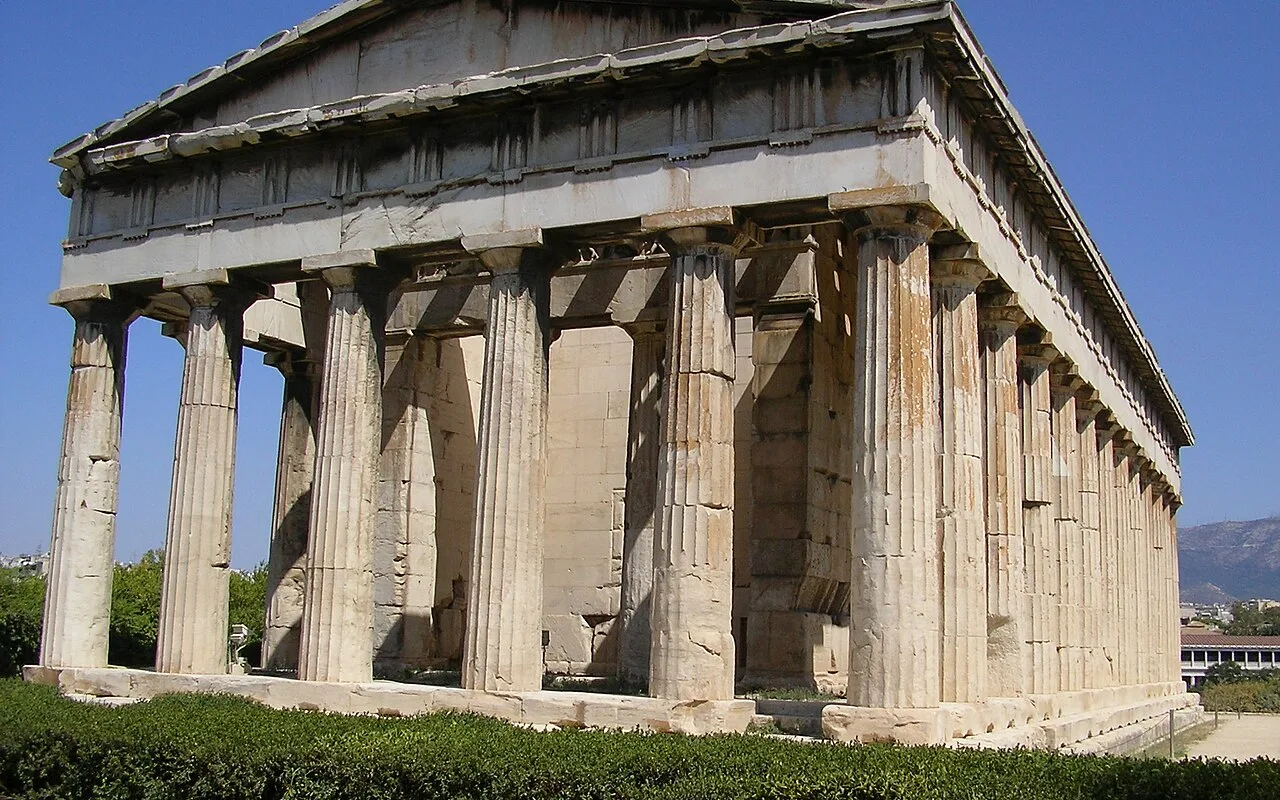
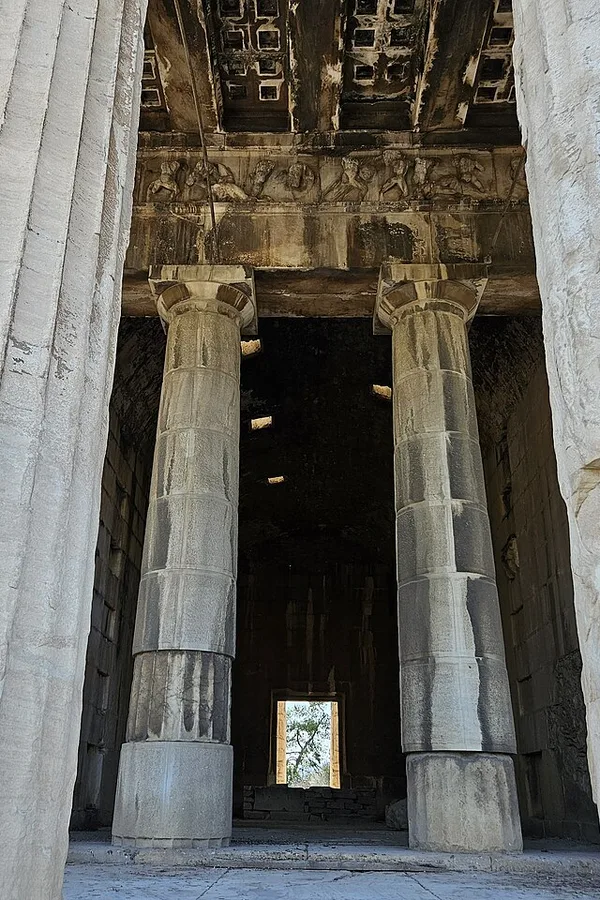
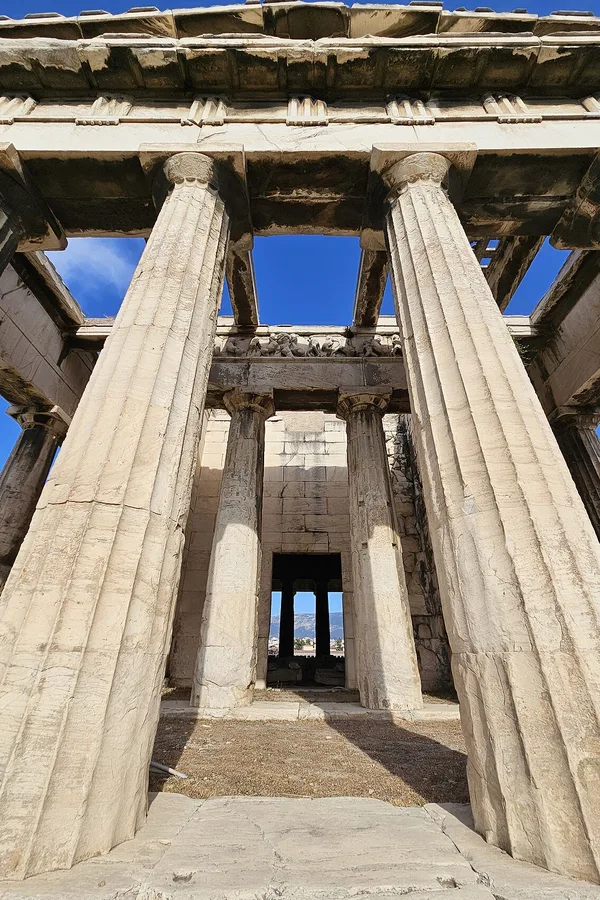
Crowning the low western rise of the Agora, on a hill once occupied by metalworkers' and potters' workshops, stands the Temple of Hephaestus — the Hephaisteion — the great survivor of ancient Athens. Built around 449 BC in the Doric order, dedicated to Hephaestus, the god of the forge, and to Athena in her role as patron of craftsmen, it is widely regarded as the best-preserved ancient Greek temple anywhere in the world. Where the Parthenon on the Acropolis above stands as a magnificent ruin, the Hephaisteion still carries its columns, its walls, its architrave and much of its roof, so that walking up to it gives an extraordinary sense of how a complete classical temple actually looked and felt.
The Stoa of Attalos and the museum
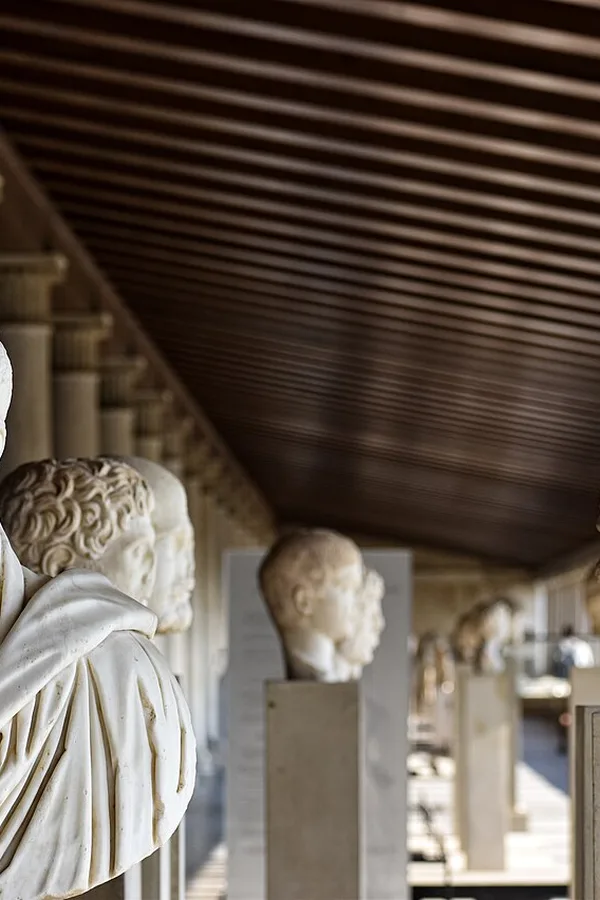
Running the length of the eastern side of the Agora is the Stoa of Attalos, a long, two-storey colonnaded hall that is unique on the site because it does not survive from antiquity — it was completely rebuilt. The original stoa was a covered shopping and promenade arcade given to Athens in the 2nd century BC by King Attalos II of Pergamon, a gesture of civic generosity from a foreign monarch who had studied in the city. Between 1953 and 1956 the American School of Classical Studies reconstructed it in full on its ancient foundations, using the same materials and methods where possible, to serve as a museum and workrooms for the excavations. It is one of the most complete and convincing reconstructions of an ancient building anywhere.
The birthplace of democracy: council house, Tholos and law courts
Along the western edge of the Agora, below the Temple of Hephaestus, lie the excavated remains of the buildings that housed the day-to-day machinery of Athenian democracy. Here stood the Bouleuterion, the council house where the Boule — the council of five hundred citizens chosen by lot to prepare the business of the democratic assembly — met to debate and draft the measures that Athens would decide. Beside it was the round Tholos, a distinctive circular building where the executive committee of the council, the prytaneis, dined at public expense and where some of them slept so that officials of the state were on duty at all hours. Together these two buildings formed the administrative core of the world's first large-scale democracy.
Socrates, the philosophers and the Apostle Paul
The Ancient Agora was not only a place of commerce and government but the intellectual crossroads of the classical city, and it is bound up with some of the most famous names in the history of thought. It was here, in the crowded marketplace and the shaded stoas, that Socrates spent his days in conversation, questioning his fellow Athenians about justice, virtue and the good life in the relentless dialogues that would shape Western philosophy. His pupil Plato and, in turn, Plato's pupil Aristotle knew this square intimately, and the philosophical schools that grew from their teaching drew on the open, argumentative culture that the Agora embodied. The very word from which we get "Stoic" comes from the stoa, the colonnade, where one school of philosophers gathered to teach.
The Ancient Agora and the Roman Agora
Visitors often confuse the Ancient Agora with the Roman Agora, but they are two distinct sites with separate tickets, a few minutes' walk apart, and it is worth knowing the difference before you go. The Ancient Agora — the site this ticket covers — is the large classical marketplace on the low ground below the northwest slope of the Acropolis, with the Temple of Hephaestus, the reconstructed Stoa of Attalos and the civic buildings of the democracy. It was the political and commercial heart of Athens for centuries and is the more extensive and historically weighty of the two.
Getting there and visiting
The Ancient Agora sits in the very heart of old Athens, below the north slope of the Acropolis, which makes it wonderfully easy to reach. The nearest metro stations are Monastiraki, served by Line 1 (green) and Line 3 (blue), and Thissio on Line 1, both only a few minutes' walk from the site. The main entrance is on the pedestrianised Adrianou Street beside the Stoa of Attalos, in the lively cafe district between Monastiraki and Thissio; a second entrance is reached from the walkway that runs below the Acropolis on the Thissio side. From most central hotels, and from the Monastiraki and Plaka neighbourhoods, the Agora is an easy stroll, and it links naturally to the Acropolis above and the other classical sites nearby. Entry is by timed hourly slot, so aim to arrive within the hour shown on your ticket.